
 By
·
3 minute read
By
·
3 minute read
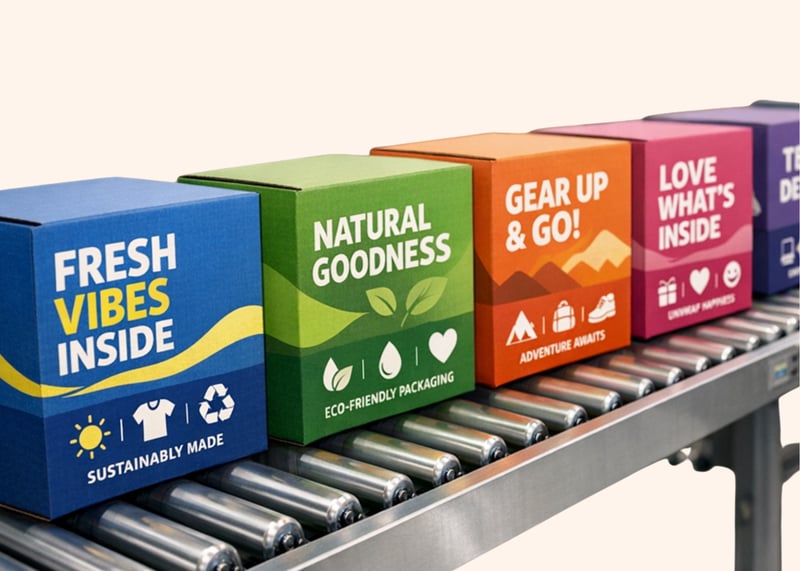
Use everyday shipping boxes as a storytelling channel that builds brand recall.
Clarify core messages and where your box fits in the brand journey
Most brands pour energy into their product labels, websites, and social feeds, but the plain corrugated shipper still leaves the building every day doing almost no marketing work. For customers who buy online or receive wholesale deliveries, that box is often the first and most frequent physical touchpoint with your brand. Treating it as a blank commodity is a missed opportunity.
Brand storytelling on everyday shipping boxes doesn’t mean turning every panel into a billboard. What it does signal is choosing a handful of messages, visuals, and structural cues that reinforce who you are.
Done thoughtfully, it also respects operations: boxes must still scan cleanly, stack safely, and qualify for curbside recycling. Begin by clarifying what you want the box to say. Is your primary goal to emphasize sustainability, highlight regional roots, promote a new fulfillment service, or simply make it easier for warehouse teams and retailers to identify what’s inside?
List the top three messages you want every shipper to carry. For a Pacific Northwest packaging manufacturer like Northwest Paper Box, that might include "Custom packaging built to impress," "Family‑owned since 1953 in the PNW," and a short line about recycled content or local manufacturing.
Then map where those ideas should live in the customer journey. The outside of the shipper can focus on bold brand marks, handling cues, and a memorable phrase that’s visible from a few feet away. The inside lid or sidewalls can carry a softer narrative: how to recycle the box, a short origin story, or a thank‑you that feels like it comes from real people.
Design graphics, messages, and color for busy shipping and retail environments
Once you know what each panel needs to do, you can start building the graphic system that will live on your corrugated shippers. Shipping boxes travel through warehouses, trucks, and back rooms before they ever reach a customer’s hands, so designs have to survive rough handling, tape, and labels.
Start with a limited palette and clear hierarchy. Choose one or two brand colors that reproduce reliably on kraft, plus black or a dark neutral for copy. Overloading corrugated with tiny details or low‑contrast art is a recipe for mud; instead, lean into bold shapes, large icons, and short headlines. Industry articles on branding corrugated boxes emphasize that simple, high‑contrast graphics are more legible across a room.
Assign jobs to specific panels. Maybe the long side panel carries your logo and tagline, one end panel shows a quick handling icon set (fragile, this side up), and the top lid reserves a quiet, low‑ink zone for carrier labels so they don’t cover your best art. For e‑commerce, consider interior print that rewards unboxing: a short welcome message, product care tips, or a regional story about how and where the product is made.
Finally, build a flexible design toolkit rather than one‑off art files. Create a library of approved logos, icons, patterns, and short phrases that can be re‑combined across sizes without reinventing the layout each time. This keeps your brand consistent even as you introduce new SKUs, seasonal graphics, or limited collaborations.
Measure and evolve your printed box program
A storytelling box program shouldn’t be static. As your channels, SKUs, and brand voice evolve, your corrugated graphics should evolve with them. Start by defining how you’ll measure success. Track customer comments about packaging in reviews and support tickets.
Monitor social media for organic unboxing content that features your boxes, and note which designs or messages show up most often. Compare repeat‑order rates and AOV for customers who have received fully branded shippers versus plain cartons, even if the sample sizes are small at first. On the production side, set a cadence for color and quality checks.
Lock in Pantone references and drawdowns for printing on kraft versus white corrugated, and require vendors to measure key colors on press rather than eyeballing them.
Periodically refresh messaging and layout while keeping structure and color foundations stable. For example, you might introduce a seasonal side‑panel illustration that rotates quarterly, or swap a call‑to‑action URL for a QR code that leads to current campaigns. When you debrief, bring real samples to the table: what scuffed, where labels landed, which messages actually caught attention. Fold those insights into your next round of dieline and artwork updates. Over time, this quiet iteration will turn your everyday corrugated boxes into a distinctive, durable canvas for your brand story. One that customers recognize from the doorstep and remember long after they’ve recycled the box!