
 By
·
4 minute read
By
·
4 minute read
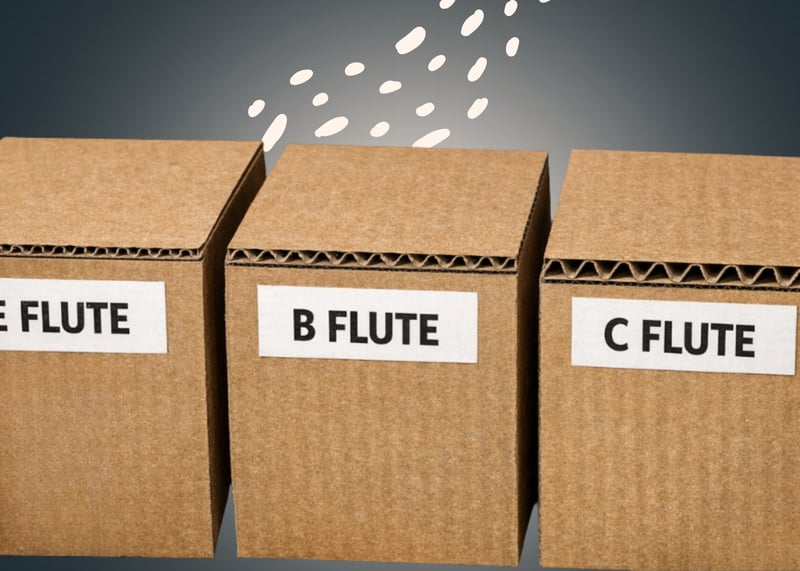
Demystify corrugated box specs so non-engineers can choose the right strength and flute.
Decode the alphabet soup: ECT, burst, and flute basics
If you don’t live in corrugated every day, box specs can feel like alphabet soup. ECT vs burst, B-flute vs C-flute, single-wall vs double-wall... Most buyers and marketers just want to know, “Will this box survive our real shipping, and are we over- or underpaying for strength?” The good news is you don’t need a structural engineering degree to make smart decisions. You just need a clear picture of what the main tests measure, what flutes actually do, and how to match those to your products and channels. From there, you can work with a partner like Northwest Paper Box to fine-tune specs, instead of throwing darts at whatever your last vendor used.
Start with the two big strength numbers you’ll see on spec sheets and box stamps: ECT and burst. ECT (Edge Crush Test) measures how much compression a piece of board can handle on its edge, how it behaves when boxes are stacked. Burst (or Mullen) measures how much pressure it takes to rupture the face of the board, how it behaves when something sharp hits the panel. Both matter, but for different failure modes.
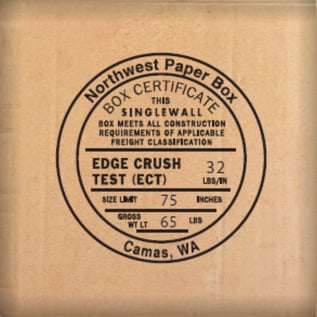
The gist: don’t let anyone sell you on one number as a magic answer, ask which test lines up with your real risk.
Next, get comfortable with flutes. Those wavy middle layers change thickness, cushioning, stacking strength, and print surface. Most brands live in B- and C-flute for shippers and mailers, sometimes adding E- or microflutes for small, highly graphic cartons.
With those basics, you can already ask better questions: “Our candles ship on pallets and sit three-high in a humid warehouse... should we prioritize ECT and consider a heavier C-flute or double-wall?” or “Our DTC mailers rarely stack but get hammered in parcel networks—can we keep ECT modest and lean more on burst and inserts?” That’s the level of specificity that turns intimidating specs into useful tools.
Translate ECT, burst, and flute choices into real shipping decisions
Now that you know what the tests measure, you can use them to make smarter day-to-day decisions instead of guessing or overbuilding “just in case.” The key is to translate ECT, burst, and flute profiles into a handful of go-to combinations for your real shipping scenarios.
Start by mapping your dominant risks. If most of your boxes travel as palletized unit loads (stacked high in warehouses or on trucks) stacking collapse is your main concern. That’s where ECT and flute selection matter most.
- 23 ECT: Best for lightweight products, inner cartons, or dunnage/void fill where stacking is minimal.
- 26 ECT: Suitable for light to moderate weights that see limited stacking during storage or transit.
- 32 ECT: The everyday workhorse; covers a wide range of shipping needs and satisfies many carrier minimums.
- 44 ECT: Designed for heavier loads or palletized shipments where boxes are stacked multiple layers high.
- 48+ ECT: Reserved for very heavy, dense, or fragile products that demand maximum compression strength and protection.
Use that as a cross-check when you’re deciding whether a 32 ECT single-wall mailer is enough for your 20 lb DTC kit, or if a 44 ECT or double-wall spec is safer for heavy wholesale cases.
If your shipments live in parcel networks (dropped on conveyors, tossed into vans, mixed with other shippers) face abuse and puncture risk move up the list. In those lanes, specifying an appropriate burst test alongside ECT ensures panels resist sharp impacts and rough handling.
Next, choose flute profiles based on both risk and presentation. C-flute remains the workhorse for standard shippers: solid cushioning and stacking strength with decent print. B-flute often shines for e-commerce mailers and retail-ready boxes where smoother print matters. E-flute and microflutes lean into high-graphic cartons but trade off some stacking muscle.
You don’t have to memorize the engineering; you just need enough familiarity to ask your packaging partner for specific combinations instead of “whatever is standard.” Finally, remember that all of these numbers live inside larger constraints like carrier dimensional-weight rules. A perfectly spec’d 44 ECT double-wall shipper that’s two inches bigger than necessary may pass tests but cost more than it needs to in freight. Keep a tape measure and your carrier’s DIM rules close at hand: USPS’s Priority Mail dimensional-weight guide is a good baseline reference: USPS dimensional weight guide. The goal is a box that’s strong enough, not overbuilt.
Build simple tools to choose, communicate, and revisit box specs
With the concepts in hand, the last step is to build simple, reusable tools so your team can choose and communicate specs without reinventing the wheel, and to keep those specs honest over time. Start with a one-page cheat sheet.
Across the top, list your most common box roles: "DTC mailer up to 10 lb," "DTC mailer 11–25 lb," "wholesale case up to 40 lb," "pallet bottom tier," and so on.
For each, fill in recommended specs: ECT rating, flute, wall type (single vs double), and a note on when to step up or down.
Attach 2–3 real examples from your current program so people can see and feel the difference.
Then, standardize how you write and share specs. Every corrugated RFQ and internal spec sheet should include: - Box style (e.g., RSC, FOL, mailer) - Internal dimensions - Board construction (single- or double-wall) and flute profile - ECT minimum (and burst, if relevant) - Testing method references
Finally, close the loop with real-world feedback. Set up a simple process so warehouse and fulfillment teams can flag recurring problems like crushed corners, panels bowing, boxes that feel “too flimsy” in hand.
Pair that qualitative input with basic metrics like damage rates and claim reasons by SKU. Once or twice a year, sit down with your packaging partner to compare what you’re seeing on the floor to what the specs promised. That’s your moment to tweak ECT targets, adjust flute profiles, or right-size problem cartons.
When non-engineers have this level of clarity, conversations with vendors shift from “make it stronger” to “we’re seeing edge crush on the bottom tier of 40 lb wholesale cases; let’s discuss moving from 32 to 44 ECT C-flute or adding an insert.” That’s the kind of practical, shared language that keeps costs and risks where they belong... In your control!