
 By
·
5 minute read
By
·
5 minute read
Getting a food or beverage product into a store is a big deal.
Getting someone to notice it once it is there is another challenge entirely.
Grocery stores, bottle shops, specialty markets, convenience stores, and other retailers are packed with competing products. A new flavor gets a few seconds of attention. A seasonal release shares space with dozens of familiar brands. Even great packaging can disappear once it joins a crowded shelf.
Custom point-of-purchase displays give brands another place to show up.
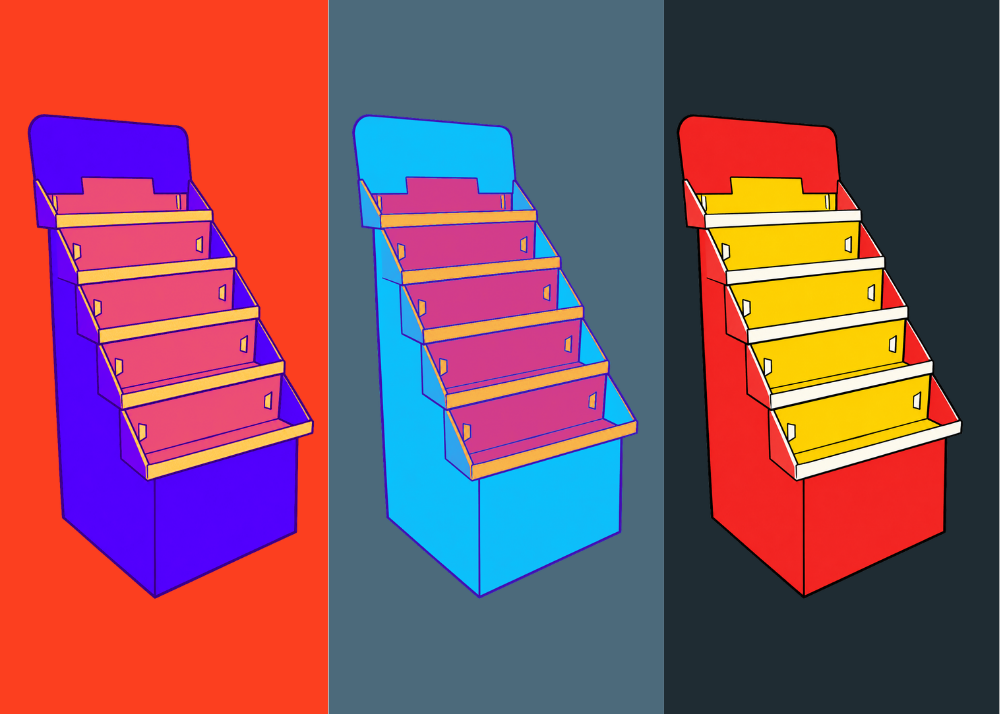
Corrugated counter displays, floor displays, trays, and retail-ready packaging can organize products while giving the brand more visual space at the point of sale.
Northwest Paper Box designs and manufactures custom corrugated packaging and displays in Camas, Washington, serving food and beverage brands throughout Oregon and Washington.
What Is a Point-of-Purchase Display?
A point-of-purchase display, often shortened to POP display, is a branded display placed near the location where a customer makes a buying decision.
You have probably walked past several without thinking about it.
A small display of protein bars beside a register. A branded case of sparkling water at the end of an aisle. Hot sauce bottles organized in a countertop tray. A seasonal snack display sitting near the entrance of a grocery store.
Those are all versions of the same idea.
Bring the product together, make it easy to shop, and give the brand a little room to speak for itself.
Common corrugated POP displays include:
- Countertop displays
- Floor displays
- Shelf displays
- Retail trays
- Product bins
- Branded display cases
- Seasonal promotional displays
- Retail-ready cases
The structure depends on the product, quantity, available retail space, and how the display will be stocked.
Why Do Food and Beverage Brands Use Corrugated Displays?
Corrugated is a practical material for temporary and promotional retail displays.
It is lightweight, printable, customizable, and capable of holding a surprising amount of product when the structure is designed correctly.
It also gives designers room to work.
A standard product package might only offer a few inches of printable space. A floor or countertop display provides a much larger canvas for color, logos, product messaging, illustrations, and launch graphics.
That extra space is especially valuable for brands shoppers do not recognize yet.
The display gets to introduce the product before the package has to finish the job.
What Makes a Good Food or Beverage Display?
A POP display needs to look good.
It also needs to stand up.
Food and beverage products can get heavy quickly. Bottles, jars, cans, sauces, snacks, and packaged foods all put different demands on corrugated structures.
A display holding lightweight snack bags is solving a very different problem from one loaded with glass bottles.
Product weight, dimensions, quantity, shelf arrangement, center of gravity, and the expected life of the display all influence the structure.
Then there is the human element.
Someone has to assemble it.
Someone has to stock it.
Customers need to understand where the product is and how to grab it without knocking everything else over.
The best display is not necessarily the one with the wildest shape. It is the one that looks good after a week of actual shoppers using it.
What Is Retail-Ready Packaging?
Not every retail solution needs to be a freestanding display.
Sometimes the shipping case itself can do more work.
Retail-ready packaging is designed to move products through distribution and transition quickly into a shelf or display format at the store. Part of the case may be removed or opened, leaving the products organized inside a tray.
That can reduce the amount of individual handling required to stock a shelf.
Instead of opening a case, removing every product, breaking down the box, and arranging everything one piece at a time, store employees can place the prepared tray directly into position.
Simple idea. Big difference at scale.
Retail-ready packaging can work particularly well for products sold in consistent quantities, including:
- Snack foods
- Canned beverages
- Sauces
- Condiments
- Packaged coffee and tea
- Candy and confections
- Small jars
- Specialty foods
The shipping package and retail presentation become part of the same system.
Can a Shipping Case Become Part of the Display?
Sometimes, yes.
A corrugated case does not always need to disappear into the back room.
With the right structure and graphics, parts of the shipping case can remain with the product on the sales floor. Tear-away sections, trays, printed panels, and other structural features can turn transportation packaging into a cleaner retail presentation.
That can mean fewer separate packaging components and less setup at the store.
It also forces the design to solve two problems at once.
The case still needs to survive distribution. The remaining display needs to look intentional after the outer portions are opened or removed.
A crushed tray with beautiful printing is still a crushed tray.
Structure comes first.
Where Do Countertop Displays Work Best?
Small products can get lost on a big shelf.
Countertop displays bring them together.
They are common near registers, tasting areas, service counters, and other high-traffic parts of a store. Food and beverage brands can use them for individually packaged snacks, small bottles, packets, samples, and other grab-and-go products.
The footprint matters.
Retail counter space is valuable, so a display should make good use of every inch without becoming annoying to work around.
A compact display with clear branding can do more than an oversized structure fighting for space next to the register.
Nobody wants to be the display employees keep moving out of the way.
When Do Floor Displays Make Sense?
Floor displays give brands more room to make an impression.
They can support larger quantities of product and create a dedicated branded area away from the standard shelf. Grocery aisles, store entrances, endcaps, promotional areas, and seasonal sections are common locations.
They are especially useful for:
- New product launches
- Seasonal flavors
- Limited releases
- Holiday promotions
- Variety packs
- Regional campaigns
- Product collaborations
A floor display also has to survive life on the sales floor.
Shopping carts bump things. Products get removed unevenly. Customers move items around. Employees restock from different directions.
A good structural design expects some chaos.
Retail rarely stays as tidy as the rendering.
How Much Branding Should Go on a POP Display?
More printable space does not mean every inch needs something on it.
A display has a few seconds to communicate.
The brand should be recognizable. The product should be obvious. The main message should be easy to understand from the distance where shoppers will actually see it.
That might mean a large logo, one strong product image, a short headline, or a distinctive brand color.
Detailed information belongs where someone can stop and read it. The main display needs to work before that happens.
Think billboard, not brochure.
How Can POP Displays Support Seasonal Products?
Food and beverage brands live by the calendar.
Pumpkin shows up. Peppermint follows. Summer brings citrus, berries, barbecue, and cold drinks. Limited releases and collaborations create their own miniature seasons.
Corrugated displays work well for these shorter retail runs because the structure and graphics can be built around a particular campaign.
A brewery might create a display for a seasonal variety pack. A specialty food producer might group several products into a holiday collection. A beverage company could introduce a new flavor with a dedicated floor display.
The display gives the campaign a physical home inside the store.
Once the promotion ends, the next one can look completely different.
Why Does Local Manufacturing Matter for Retail Packaging?
Retail packaging usually involves more than putting artwork on a box.
Products need to be measured. Weight needs to be considered. Samples may need to be tested. Retail requirements can change the size or structure. A display that looks fantastic on a screen might need several adjustments before it works on an actual sales floor.
Being close to the manufacturer makes that process easier.
Northwest Paper Box manufactures custom corrugated packaging and displays in Camas, Washington, just across the Columbia River from Portland.
We work with brands throughout Oregon and Washington, including businesses in the Portland, Vancouver, and Seattle markets.
That regional connection makes it easier to bring products into the conversation early.
Put the bottles, bags, cans, jars, or boxes on the table. See how they fit. Build around the real thing.
What Should You Bring to a POP Display Project?
Start with the product and the retail space.
A display designer will want to understand:
- Product dimensions and weight
- Number of products per display
- Desired display type
- Available floor, shelf, or counter space
- Retailer requirements
- How the display will ship
- Assembly requirements
- Printing and branding needs
- Estimated quantity
- Project timeline
Photos of the intended retail environment can be surprisingly useful too.
A display does not exist in a design file. It exists next to shelves, shopping carts, signs, other products, and people trying to get through an aisle.
Design for that environment.
Custom POP Displays in Oregon and Washington
Food and beverage packaging has to do plenty before a shopper ever sees it.
Cases move through warehouses. Products travel on pallets. Boxes get opened in back rooms.
The POP display gets a different assignment.
Get noticed.
Northwest Paper Box has manufactured custom packaging in the Pacific Northwest since 1953. From our facility in Camas, Washington, we produce custom corrugated displays, retail-ready packaging, trays, shipping cases, inserts, and other packaging for businesses throughout Oregon and Washington.
Your product already earned its place in the store. Let's make sure shoppers can find it.