
 By
·
4 minute read
By
·
4 minute read
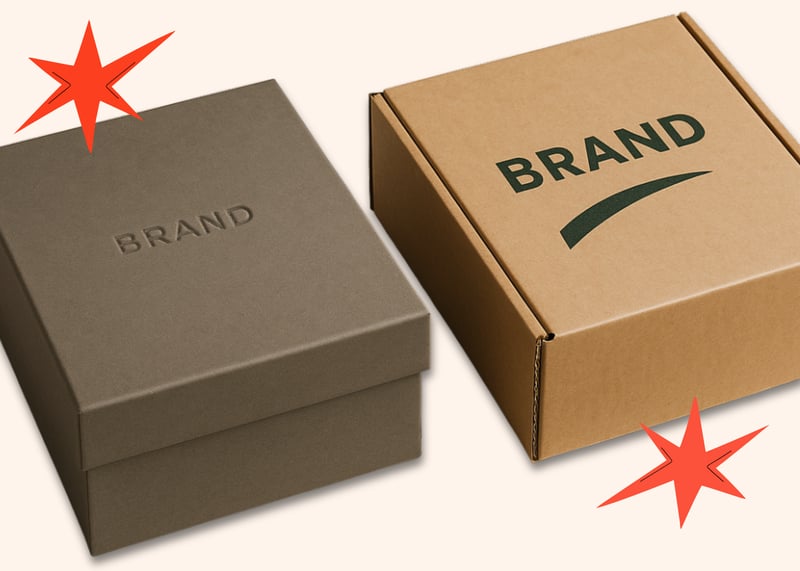
Use this practical guide to decide between rigid set-up and corrugated boxes.
When Rigid Set-Up Boxes Win for Brand Impact
Rigid set‑up boxes and corrugated boxes are both excellent, but they excel in different jobs. If your product lives in gifting, premium retail, or high‑touch unboxing, rigid set‑up creates an unmistakable sense of value.
Constructed from dense paperboard and wrapped with elevated materials (textured papers, soft‑touch films), rigid boxes deliver crisp edges, tight lids, and weight in the hand that signals quality. They shine when you need debossed logos, foil, special structures like shoulder‑neck bases, or compartments for multi‑piece assortments. For inspiration on craftsmanship, the Paperboard Packaging Council details how luxury rigid boxes are engineered and celebrated in industry awards: PPC: The Luxurious Rigid Box and recent innovations in PPC 2025 Awards.
Rigid’s tradeoffs are real. Units ship and store fully formed, so they take more space and can increase freight and warehousing costs. They’re slower to assemble at scale unless you design with efficient inserts and standard lid/base tolerances. And while wraps and boards are recyclable in most communities, multi‑material decoration can complicate sorting, something to plan for during specification.
Corrugated boxes, by contrast, are structural workhorses designed for transit and operational efficiency. Because they ship flat and are built quickly, they reduce storage space and pack time. They’re tuneable by board grade and flute to balance cushioning and compression strength, and they accept a broad range of printing from clean, cost‑effective flexo to offset‑quality litho‑lamination.
Corrugated is also widely recovered in U.S. recycling streams, supporting brand sustainability goals when paired with sensible ink and coating choices (see EPA’s guidance on sustainable packaging: EPA sustainable packaging). The question isn’t rigid or corrugated; it’s which tool best serves your brand, channel, and operations for this specific launch. The sections below compare strengths and then offer a practical decision framework you can reuse for every packaging brief.
When Corrugated Boxes Win for Protection and Cost
Corrugated boxes dominate e‑commerce and wholesale shipping for good reason: they’re light, durable, cost‑effective, and exceptionally recyclable. Built from fluted mediums sandwiched between linerboards, corrugated can be engineered by flute profile (B, C, E, etc.) and board grade to balance stacking strength, cushioning, and printability.
That flexibility lets you dial in performance for everything from subscription kits to heavy industrial parts without over‑packaging. Protection starts with structure. Double‑wall and heavy single‑wall boards resist compression and puncture during parcel handling and LTL freight. Add die‑cut inserts (chipboard, corrugated, or foam) and you create precise cavities that immobilize products and manage shock. For higher‑end retail, litho‑laminated corrugated pairs a premium printed sheet with strong board to deliver both shelf impact and ship‑ready strength.
On cost, corrugated typically wins. Tooling is straightforward, unit prices drop quickly with volume, and storage footprints are efficient because boxes ship and store flat. In kitting and fulfillment, taped or auto‑lock bottom styles reduce pack time and labor. When you’re balancing budget and protection (especially at scale) corrugated is often the smartest first choice. Sustainability is another core advantage. Corrugated is among the most successfully recovered materials in the U.S. According to the U.S. EPA’s materials data, paper and paperboard achieve high recycling rates, with corrugated boxes consistently leading recovery by weight. See the EPA overview of sustainable packaging and paper data for context: EPA sustainable packaging and EPA paper & paperboard data.
Print and finish options continue to expand. Water‑based flexographic inks enable clean, brand‑forward graphics with fast setup and responsible chemistry. For photographic or highly saturated art, litho‑lamination brings offset‑quality imagery to corrugated panels. Spot varnishes, soft‑touch laminates, and foil accents are all achievable while maintaining a ship‑worthy structure. Choose corrugated when: you need cost‑effective protection in transit; you’re shipping direct to consumers or wholesale; you require rapid pack‑out in fulfillment; or you plan frequent size iterations as your product line evolves. With the right engineering and print plan, corrugated carries your brand reliably from loading dock to doorstep.
A Practical Decision Framework for Your Next Packaging Run
Here’s a simple, brand‑first framework we use with customers to make confident, defensible packaging decisions:
1) Define the job the package must do. List the top three functions: protect (drop/stack), present (in‑store or in an unboxing), and process (pack speed, label zones, barcodes). Weight your priorities. If 70% of value is protection and throughput, corrugated likely leads. If 70% is presentation and perceived value, rigid set‑up pushes ahead.
2) Quantify logistics realities. Map your actual channel: parcel vs. freight, average zone, distribution center touches, storage conditions, and seasonal volume spikes. This informs board grade, insert design, and the tolerance for scuffing or corner crush. Pull historical damage claims to set a target for acceptable risk.
3) Align brand goals to materials. Decide how the box should communicate your positioning. Luxury, gifting, and premium keepsakes often benefit from the heft and tactile finishes of rigid set‑up. Everyday DTC shipments need the versatility and light weight of corrugated. Consider how your sustainability story shows up: post‑consumer content, recyclability, and minimizing components.
4) Lock in print and finish specs early. Establish color standards (Pantone references and drawdowns), surface finishes (matte, soft‑touch, aqueous), and embellishments (foil, emboss). For corrugated, determine if direct flexo is sufficient or if litho‑lam will better serve gradients and small type. For rigid, specify wrap papers, board caliper, and lid/base geometry.
5) Validate with samples. Build white dummies to confirm fit, then printed comps for color and finish. Use transit tests and simple drop/stack trials. Document everything so reorders match. As you finalize, ensure recyclability and labeling remain clear and compliant; resources like How2Recycle explain how to communicate disposal instructions honestly.
6) Consider total landed cost. Include freight, storage (flat‑packed corrugated vs. pre‑formed rigid), pack labor, damage returns, and customer lifetime value impacts from presentation. Sometimes a slightly higher unit cost results in lower total cost because pack time drops or returns fall. When in doubt, prototype both paths. Present the rigid concept for premium campaigns, PR kits, or retail display; deploy optimized corrugated for replenishment and e‑commerce.
This blended approach gives you premium moments where they matter and keeps everyday operations efficient and sustainable.